.svg)

Next


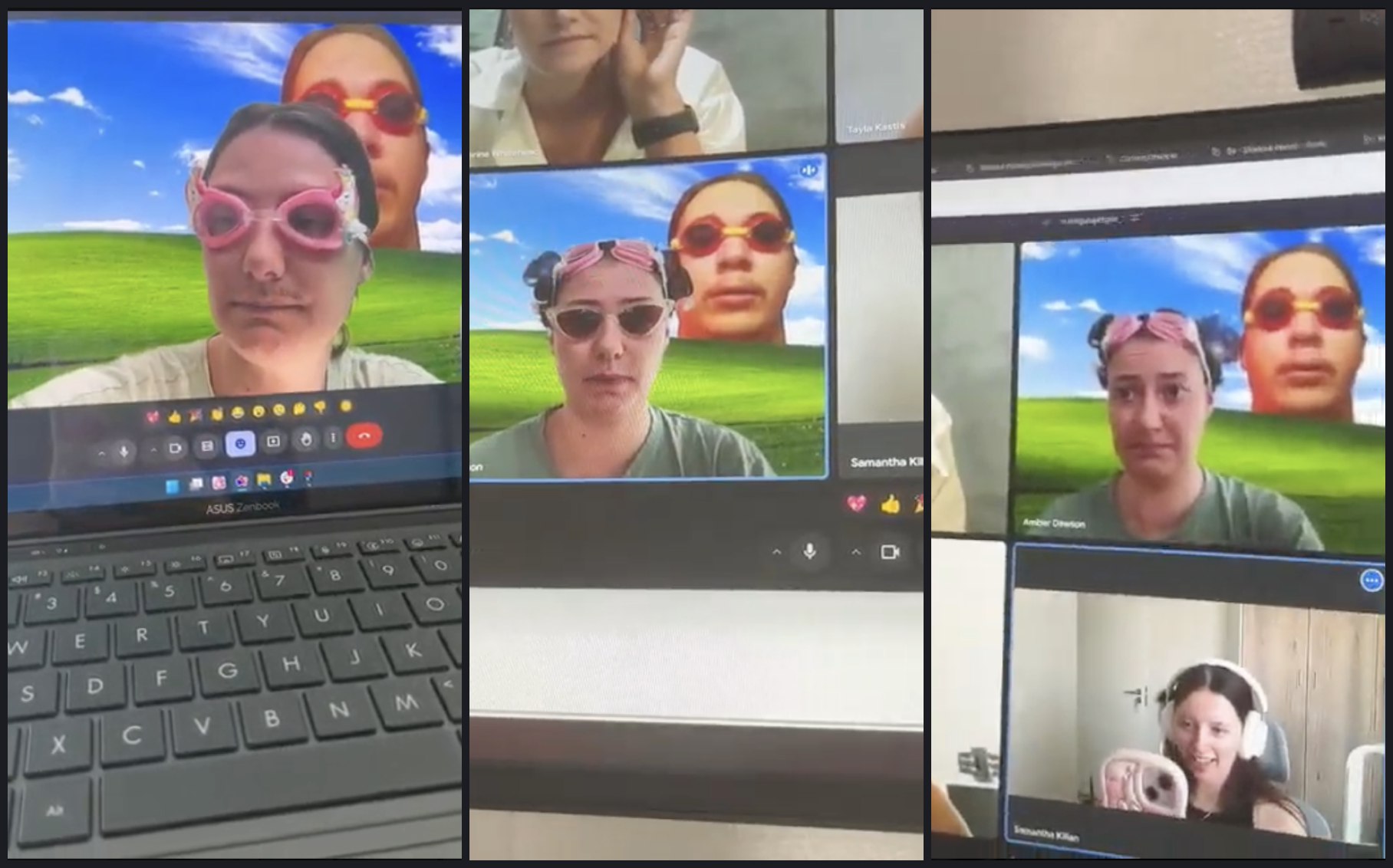
On a random Wednesday in 2024, a Google Meet background became the spark to something much larger. Started as a second thought by our inhouse designer. Nothing strategic. Nothing planned. Just something silly to make an ordinary midweek meeting a little less ordinary.
Then the following Wednesday, Amber set the background again. And then the next...
That got us thinking! Maybe the answer to flat recurring meetings isn't another agenda template, tighter timekeeping or a mandatory icebreaker…Maybe what they're missing is a ritual.
Most meeting advice focuses on efficiency. Keep it short. Have an agenda. Invite fewer people. Cancel the meeting if it could have been an email. And there are good reasons for that. Worklytics, for example, suggests that around 4–8 hours of meetings a week is a healthy range for many individual contributors, however consistently hitting 12+ hours of recurring meetings can contribute to cognitive overload and in extreme cases, burn out.
Those are useful things to measure. But here's what those metrics can't tell you: does anyone actually want to be there?
You can run an incredibly efficient 30-minute meeting and still have a group of people silently praying for it to end. Because efficiency and energy aren't the same thing.
Running regular team meetings unfortunately can lead to the consequence of team members dropping in their engagement, and shaving another seven minutes off the agenda probably isn't going to fix the culture around it. At some point, you need to give people a reason to feel differently about that space.
For us, completely spontaneously, that became our weekly Wednesday Google Meet background feature and the occasional guess-who dress up.
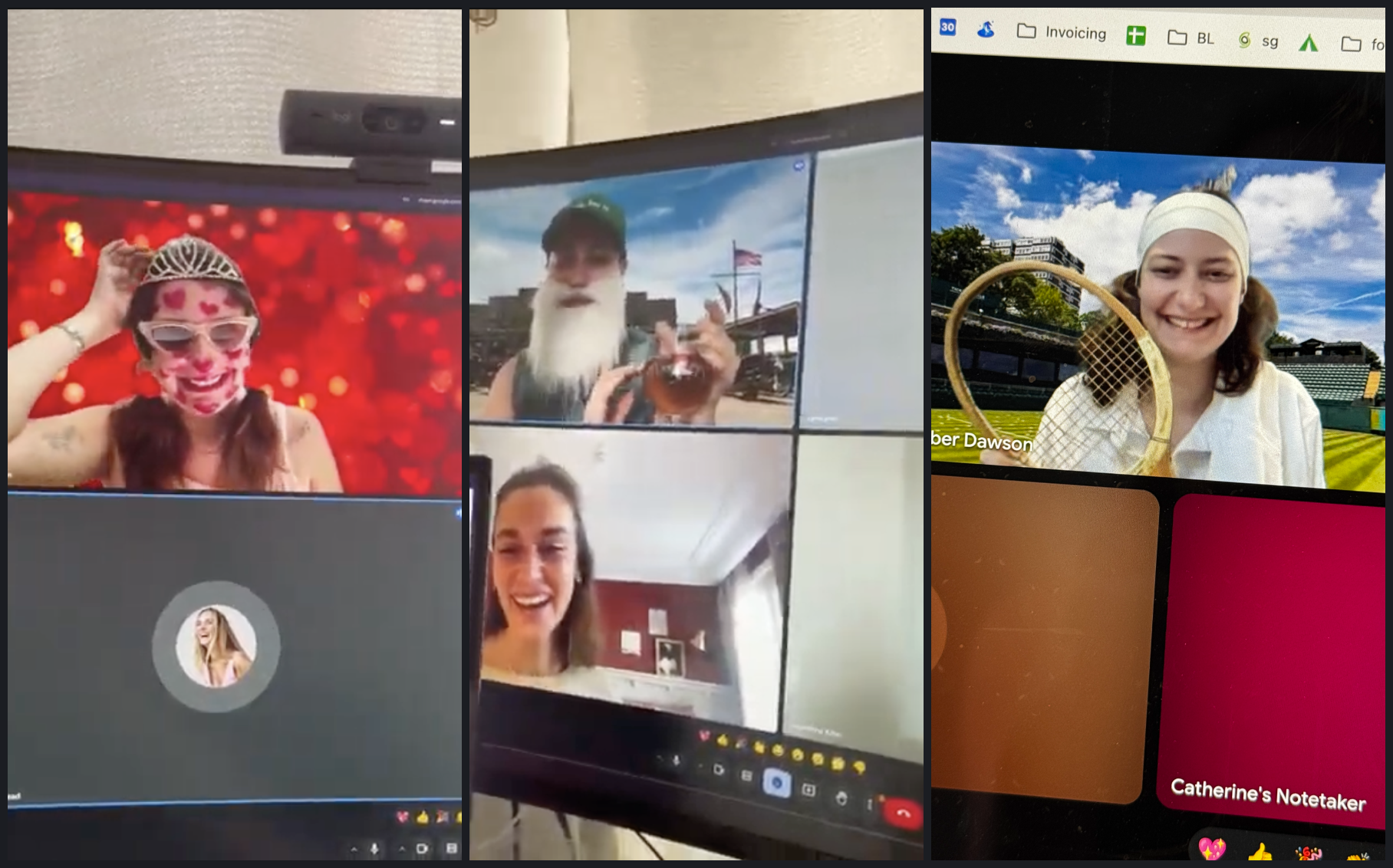
We're not suggesting every founder reading this orders a pirate costume before their next stand-up. Although we're also not not suggesting it. That’s your call.
The dress-up was never really the ritual. The Wednesday background was. Week after week, the same Wednesday background would appear on Amber's screen, becoming a small but consistent marker that we'd made it to the middle of the week.
Now and then, the background spills into real life and Amber appears with a wig, an outfit or something equally unexpected. It gets the team talking, laughing and occasionally trying to work out what on earth is happening before the meeting has even started.
But we didn't realise how much the background itself had become part of our week until one Wednesday when it was missing; Amber just attended with a standard background.
Cath opened that meeting with: “Okay, well, happy Wednesday, sorry, I almost didn't know that it was Wednesday because Amber's let the team down. But we move.”
And there it was.
Something that started as a silly Google Meet background had become a marker in our team's week. Nobody planned it. Nobody labelled it a culture initiative. But its absence was noticeable.
That's the thing about rituals. They don't have to be big to create a sense of connection. Sometimes they're just small, repeated moments that give a team something familiar to anticipate, talk about and share.
And somewhere along the way, those small moments start becoming part of your culture.
There's another layer to this that has nothing to do with getting a laugh. Someone has to be willing to look ridiculous first.
When someone happily turns up to a team meeting looking different, they're signalling something without having to put it in the company values deck: you are allowed to be a person here. You can make a joke. You can be authentic. You can be a little quirky without wondering whether everyone suddenly thinks you're unprofessional.
This marks the psychological safety that strengthens your team's bond.
We tend to talk about psychological safety through the big stuff: admitting mistakes, disagreeing with someone senior or asking the “stupid” questions. But teams don't magically become safe when someone announces that they are. That environment gets built through many much smaller interactions.
The costume isn't what creates that safety. It's simply one small sign that safety is already there.
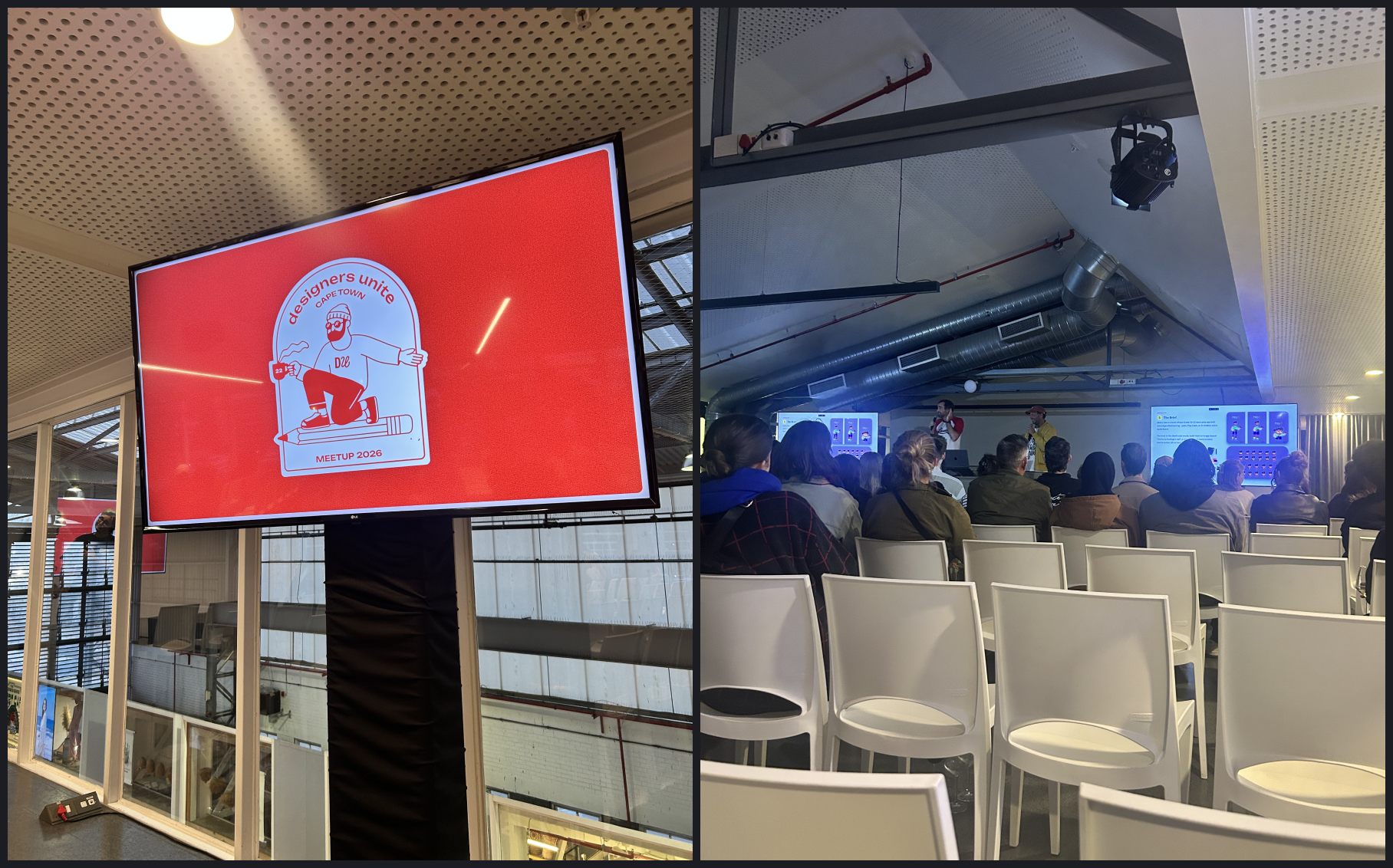
At a recent design event, we experienced an incredibly fun and engaging presentation where the speakers had their own way of moving from one topic to another.
They asked the audience to say “meow” if they stayed on a slide for longer than a minute. Honestly, they probably ended up saying it themselves more than the audience.
That's it. And it worked.
The audience quickly knew what it meant, started anticipating it and shared the joke. One completely unnecessary word gave the talk its own little language and, more importantly, made it memorable. In one presentation, we were transported into their company culture and it was positively infectious.
That's what makes rituals interesting. They don't have to be big enough to deserve a Slack announcement and a Notion page explaining the rules. Actually, we very seriously advise against this.
They can be stupidly small: a weird transition word, a song before your Monday meeting, an unnecessarily prestigious weekly award, a recurring theme, a stupid hat or in our case; Amber arriving as something nobody expected on a Wednesday morning.
This is where we need to issue a warning.
Do not read this article, open Slack and announce: “Hi team! Starting next week, we will be implementing a weekly culture-building ritual to improve employee engagement 🎉.”
Because by then, you've killed it.
Rituals work because teams make them their own in their own time. They start naturally, people respond to them and eventually everyone knows the joke without needing it explained.
So don't start by asking, “What activity can I make my team do?” Instead, ask: “What could give our recurring meeting its own identity?”
Start with something small and familiar, then see what the team does with it. If people start referencing it outside the meeting, adding their own ideas or asking where it is when you forget, you're probably onto something. If you hear a collective groan, take it as your sign to retire it immediately. We will not be held responsible for your compulsory Crazy Hat Thursdays.
We don't think people need to be excited about every meeting or every day at the office. That might be asking too much. But having small moments to anticipate can shift the energy of a team. Maybe it's something that happens in a weekly meeting, a ritual at the coffee station, an ongoing office joke or something unexpected that breaks up the week.
The ritual itself matters less than having those small, shared moments that people recognise as theirs.
That's the difference we've noticed with our Wednesdays. The costume gets the initial laugh, but the actual value is everything that's grown around it: anticipation, a shared language and a little energy boost right when the week needs one.
So if your recurring team meeting has started feeling lifeless, maybe don't reach for another productivity framework. Rather aim to give moments your team can resonate with, something that they can anticipate. Even if that something is just saying “meow.”
Stop asking, “How do we make our meetings more efficient?” Start asking, “What makes this meeting feel like ours?”
The answer doesn't need to be complicated. In fact, it's probably better if it isn't. Try one small ritual in your next recurring meeting and give it a few weeks. See whether people start anticipating it, talking about it or adding to it themselves.
If they do, you've created something more valuable than another meeting rule. You’ve planted a seed which will continue to grow your team's culture.
If you have a recurring team ritual, tag @Funtownstudio on LinkedIn. We want to see it.
Bonus points if it's quirkier than ours.
Related blogs
